

Introduction
In today’s world, sustainability has become more important than ever. Governments, industries, and consumers are all focusing on reducing waste and improving environmental responsibility. One key concept that plays a major role in this movement is recyclatanteil. As discussions around recycling and eco-friendly production grow, this term is gaining attention across environmental and industrial sectors.
Whether you encountered recyclatanteil in packaging labels, environmental reports, manufacturing discussions, or sustainability blogs, understanding its meaning is essential. It helps explain how much recycled material included in a product and why that matters for the planet. This guide breaks down everything about recyclatanteil, including its definition, benefits, applications, challenges, and future importance in a simple and clear way.
What Is Recyclatanteil?
Recyclatanteil is a German-origin term that refers to the percentage of recycled material used in a product or production process. In simple words, it shows how much of a product is made from previously used and recycled resources instead of new raw materials.
This concept, widely used in industries such as packaging, plastics, textiles, construction, and manufacturing. The higher the recyclatanteil, the more environmentally friendly the product is considered, because it reduces the need for new resource extraction.
Quick Definition
Recyclatanteil is the proportion of recycled content used in a material or product, expressed as a percentage.
Why Is Recyclatanteil Becoming Important?
The importance of recyclatanteil has grown significantly in recent years due to global environmental concerns.
Rising Environmental Awareness
People are becoming more conscious of pollution, climate change, and resource depletion.
Government Regulations
Many countries now require companies to report or increase recycled content in their products.
Consumer Demand
Modern consumers prefer eco-friendly products with higher sustainability standards.
Corporate Sustainability Goals
Businesses are focusing on reducing carbon footprints and improving environmental performance.
Key Features of Recyclatanteil
Understanding the main characteristics of recyclatanteil helps explain its importance in modern industries.
Percentage-Based Measurement
It is usually measured as a percentage, showing how much recycled material is included.
Material Transparency
It provides clear information about product composition.
Industry Standard Indicator
Many industries use it as a benchmark for sustainability.
Environmental Relevance
It directly relates to reducing waste and conserving natural resources.
Quality Control Factor
It helps manufacturers balance sustainability with product performance.
Benefits of Recyclatanteil
A higher recyclatanteil offers several environmental and economic advantages.
Reduced Environmental Impact
Using recycled materials lowers pollution and reduces landfill waste.
Conservation of Natural Resources
It decreases the need for raw material extraction like oil, wood, or minerals.
Energy Savings
Recycling often requires less energy compared to producing new materials.
Lower Carbon Emissions
Manufacturing with recycled content reduces greenhouse gas emissions.
Improved Brand Image
Companies that use higher recyclatanteil are often seen as environmentally responsible.
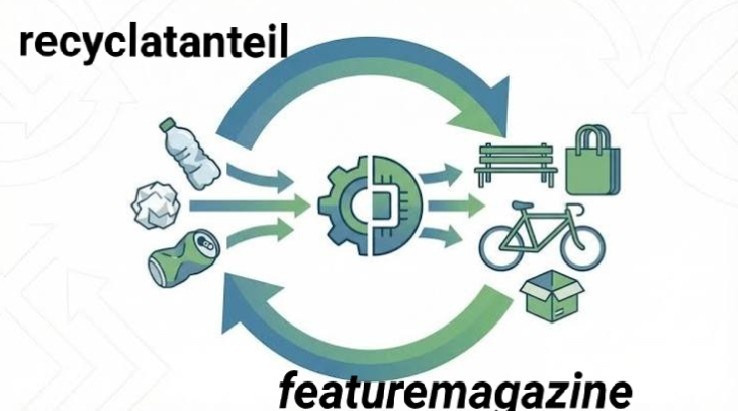
How Recyclatanteil Works in Industry
The concept of recyclatanteil applied differently depending on the industry.
Collection of Waste Materials
Used products are collected through recycling systems.
Sorting and Processing
Materials are separated based on type and quality.
Reprocessing into Raw Materials
Recycled materials are converted into usable production inputs.
Manufacturing New Products
These recycled inputs are used to create new goods with a defined recyclatanteil.
Common Applications of Recyclatanteil
Recyclatanteil is used across many industries where sustainability is a priority.
Packaging Industry
Plastic bottles, cartons, and containers often include recycled content.
Textile Industry
Recycled fibers are used in clothing and fabrics.
Construction Industry
Materials like concrete, steel, and insulation may include recycled components.
Automotive Industry
Car parts often contain recycled metals and plastics.
Consumer Goods
Everyday products like furniture, electronics, and household items may include recycled materials.
Recyclatanteil in Modern Sustainability Goals
Sustainability strategies strongly depend on increasing recyclatanteil across industries.
Circular Economy Model
The goal is to reuse materials instead of discarding them.
Waste Reduction Strategies
Higher recyclatanteil helps reduce industrial and household waste.
Green Manufacturing
Companies are shifting toward eco-friendly production systems.
Sustainable Packaging Trends
Brands are redesigning packaging to include more recycled content.
Why Businesses Focus on Recyclatanteil
Companies are increasingly adopting recyclatanteil as part of their strategy.
Compliance with Regulations
Many regions require reporting of recycled content in products.
Cost Efficiency
Recycled materials can reduce production costs over time.
Competitive Advantage
Eco-friendly products attract more environmentally conscious customers.
Long-Term Sustainability
Businesses benefit from reduced dependency on raw materials.
Challenges of Increasing Recyclatanteil
Despite its benefits, increasing recyclatanteil comes with challenges.
Quality Limitations
Recycled materials may sometimes have lower quality or strength.
Processing Costs
Sorting and processing recycled materials can be expensive.
Supply Chain Issues
Availability of recycled materials may vary.
Technical Limitations
Some industries require high-performance materials that are harder to recycle.
Best Practices for Improving Recyclatanteil
Companies can increase recyclatanteil effectively by following smart strategies.
Invest in Recycling Technology
Advanced systems improve material recovery and quality.
Design for Recycling
Products should be designed so they are easier to recycle.
Partner with Recycling Networks
Collaboration improves material collection and supply.
Educate Consumers
Awareness helps increase participation in recycling programs.
The Future of Recyclatanteil
The future of recyclatanteil looks promising as sustainability becomes a global priority.
Several trends are shaping its growth:
- Stronger environmental regulations
- Advanced recycling technologies
- Increased consumer demand for green products
- Expansion of circular economy systems
- Innovation in material science
- Corporate sustainability commitments
As industries continue evolving, recyclatanteil will become a key measure of environmental responsibility.
Emerging Trends Related to Recyclatanteil
Advanced Recycling Technologies
New methods allow better recovery of high-quality materials.
Digital Tracking Systems
Companies are using digital tools to measure recyclatanteil more accurately.
Eco-Labeling Standards
Products now display clear sustainability information for consumers.
Biodegradable Alternatives
New materials are being developed to complement recycling efforts.
Global Sustainability Policies
International regulations are pushing industries toward higher recycled content.
Frequently Asked Questions
What is recyclatanteil?
Recyclatanteil refers to the percentage of recycled material used in a product or production process.
Why is recyclatanteil important?
It helps reduce environmental impact, conserve resources, and promote sustainability.
Where is recyclatanteil used?
It is commonly used in packaging, textiles, construction, automotive, and consumer goods industries.
Does higher recyclatanteil mean better quality?
Not always, but modern technology is improving the quality of recycled materials.
What is the future of recyclatanteil?
It is expected to increase as sustainability becomes a global priority.
Conclusion
In a world facing environmental challenges, recyclatanteil has become a powerful indicator of sustainability and responsible production. It shows how much recycled material is used in products and helps industries move toward greener and more efficient systems. As awareness grows, recyclatanteil will play an even bigger role in shaping how products are designed, manufactured, and consumed.
Whether you are a consumer, business owner, or environmental enthusiast, understanding recyclatanteil helps you make better choices for a more sustainable future. With increasing innovation and global focus on recycling, this concept will continue to grow in importance in the coming years.















Leave a Reply